
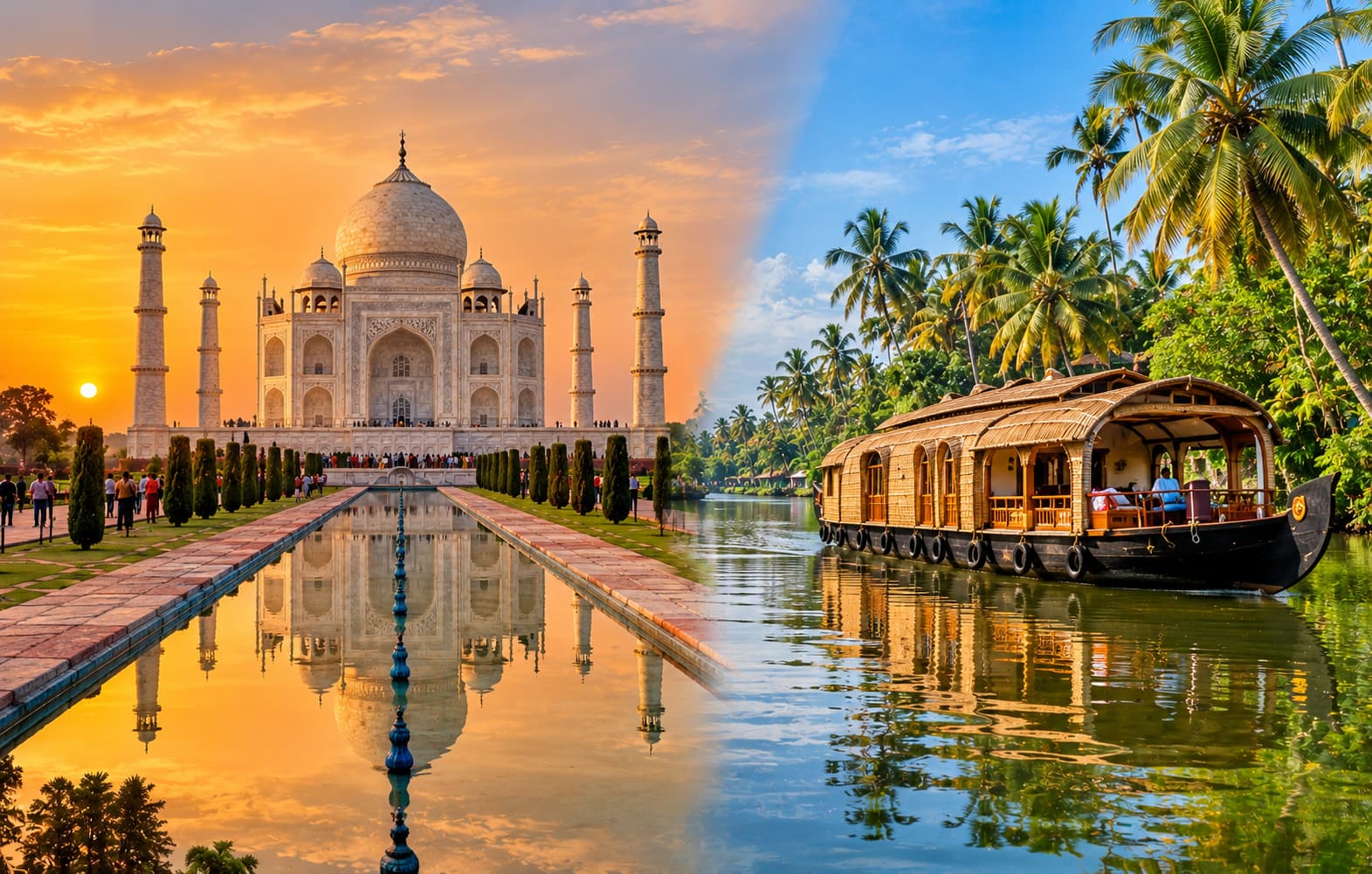
Planning your first trip to India can feel exciting—and a little overwhelming. The country offers snow-covered mountains, historic cities, tropical beaches, ancient temples, and regional cuisines that vary dramatically from one state to another. So, when comparing North India vs South India, which region should you choose for your first visit?
The answer depends on what you want from your trip. North India may suit you if you dream of the Taj Mahal, royal forts, and Himalayan scenery. South India may be a better fit if you want relaxed coastal stays, lush landscapes, and centuries-old temples. However, both regions offer memorable experiences, welcoming communities, and plenty of reasons to return.
This guide compares North India and South India across destinations, culture, food, climate, transport, and travel style. By the end, you’ll have a clearer idea of which region matches your first India itinerary.
North India vs South India: The Quick Answer
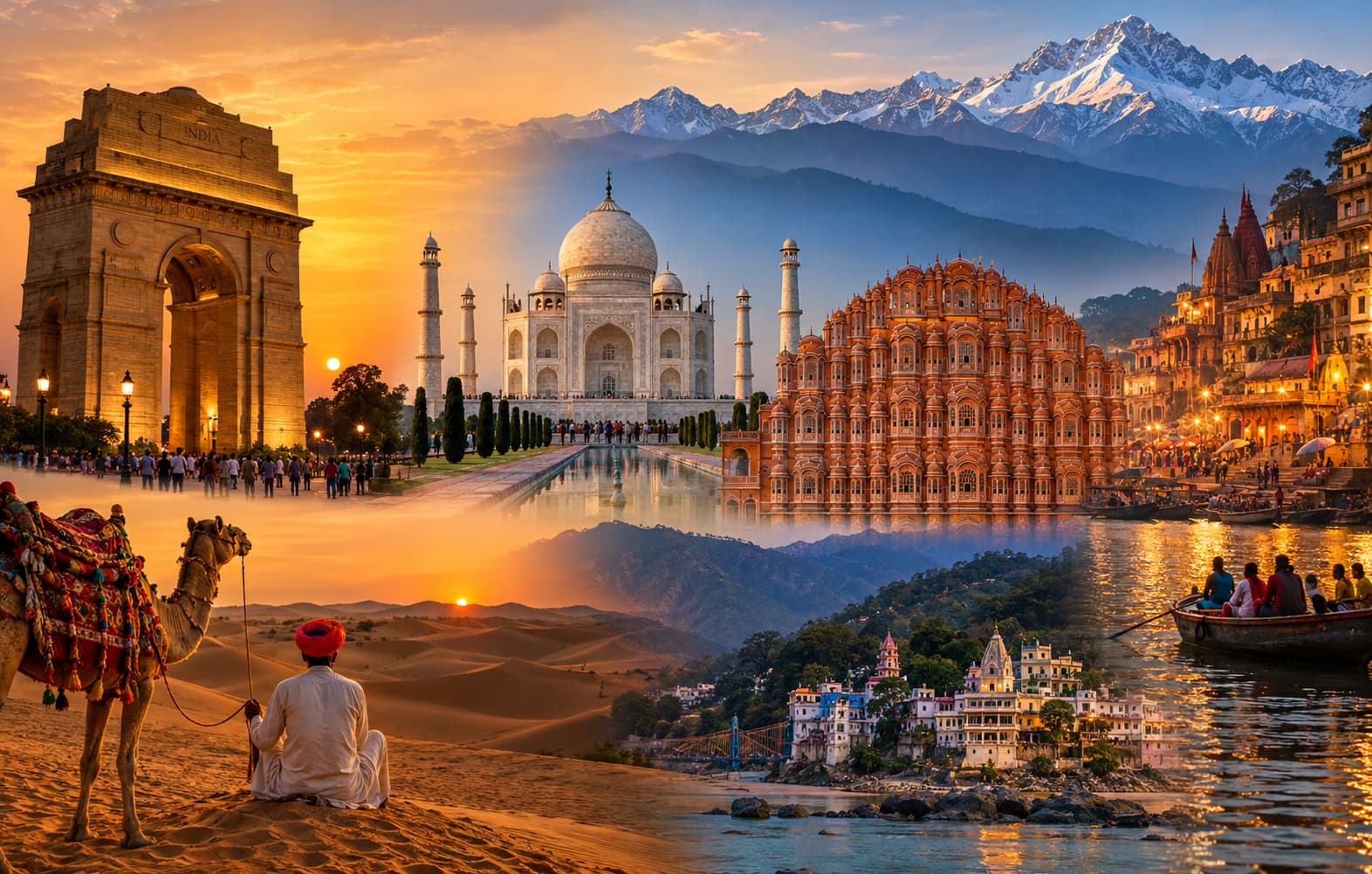
Choose North India if you want to see iconic monuments, Mughal and Rajput history, lively cities, desert landscapes, or the Himalayas. Popular first-trip stops include Delhi, Agra, Jaipur, Varanasi, and Rishikesh.
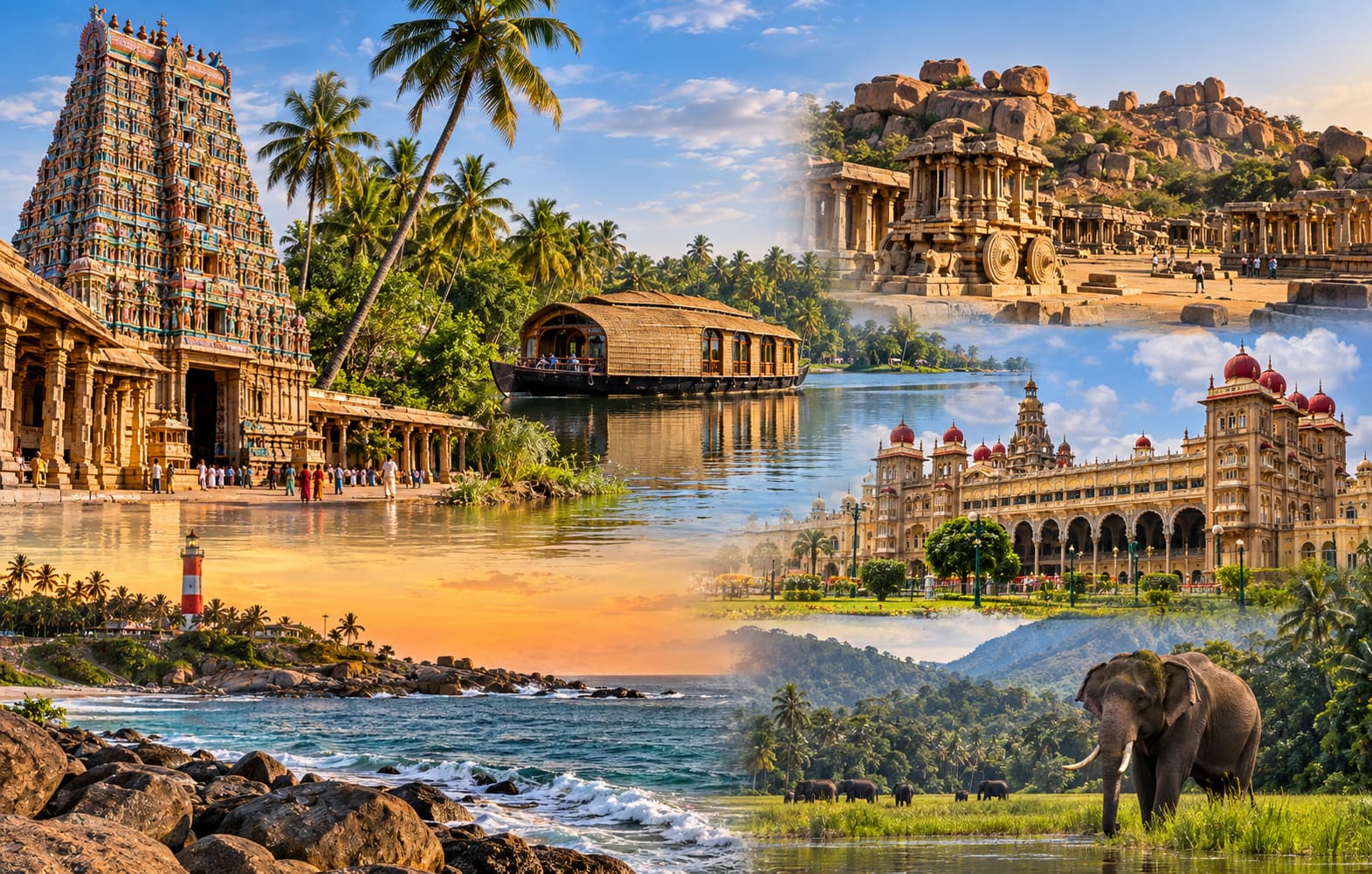
Choose South India if you prefer tropical scenery, coastal towns, temple architecture, wildlife, and a slower pace. Consider Chennai, Kochi, Mysuru, Hampi, or the Kerala backwaters.
Still undecided? That’s normal. India’s regions offer very different experiences, so it helps to think about the sights, weather, food, and pace you enjoy most.
What Can You See in North India?
North India brings together grand architecture, historic cities, spiritual destinations, and dramatic landscapes. For many first-time visitors, the Golden Triangle - Delhi, Agra, and Jaipur - provides a convenient introduction to the country.
In Delhi, you can explore centuries of history alongside modern markets and restaurants. Next, head to Agra to see the Taj Mahal, one of India’s most recognized landmarks. Jaipur, meanwhile, draws visitors with its forts, palaces, colorful bazaars, and distinctive architecture.
Beyond the Golden Triangle, North India offers even more variety. Varanasi gives travelers a glimpse of sacred riverside rituals and deep-rooted traditions. Further north, Rishikesh attracts yoga students and outdoor adventurers. If you have more time, the Himalayan states offer mountain towns, trekking routes, and cooler air.
North India may be right for you if you want:
What Can You See in South India?
South India has a different rhythm and landscape. Here, you can pair historic temple cities with tropical beaches, tea-covered hills, forests, and scenic waterways.
In Tamil Nadu, cities such as Chennai and Madurai showcase monumental temples and living religious traditions. Karnataka offers royal heritage in Mysuru and the remarkable ruins of Hampi. Kerala, in contrast, is known for its backwaters, wildlife, spice plantations, and coastal scenery. For a beach-focused trip, Goa is also a popular choice, although it has its own distinct culture and travel style.
South India also rewards travelers who enjoy slowing down. You might spend a morning visiting a temple, take an afternoon train through the countryside, and finish the day with a meal made from local ingredients. As a result, the region can feel especially appealing if you want nature and cultural experiences in the same itinerary.
South India may suit you if you’re looking for:
Culture and Travel Style: North India vs South India
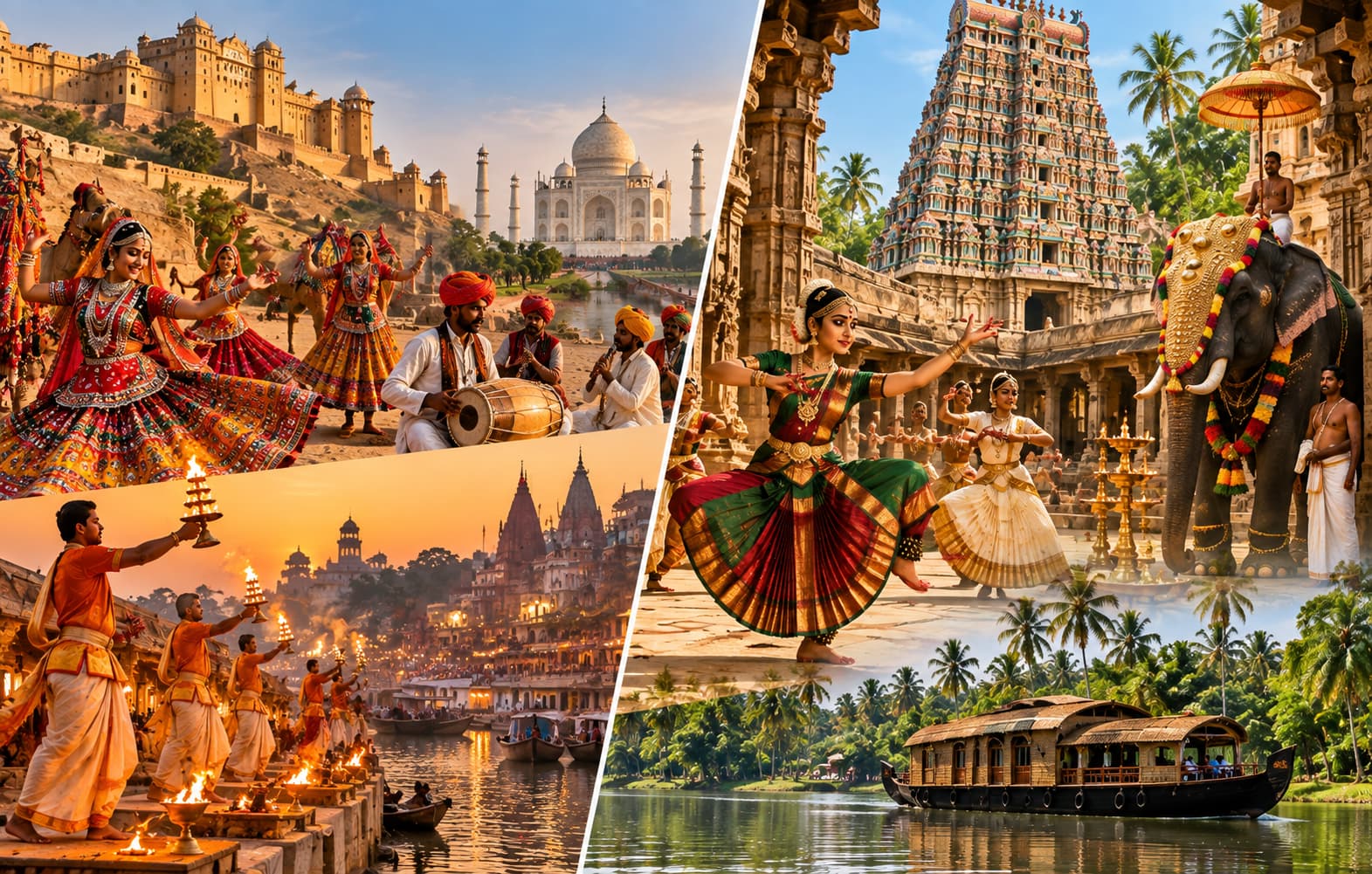
India is not culturally uniform, and the differences between regions are part of what makes travel so rewarding. North India includes many languages, traditions, and food cultures. Hindi is widely spoken in several northern states, though English is common in many tourist settings and other languages are also widely used.
In South India, languages such as Tamil, Telugu, Kannada, and Malayalam are central to everyday life. English is also used in many hotels, restaurants, and visitor services. In both regions, learning a few polite local phrases and respecting customs can make interactions more comfortable.
Travel style varies from city to city, not just from north to south. Some visitors find the busy markets and traffic in major northern cities intense. Others love the energy. South India can feel calmer in certain destinations, although large cities and popular attractions can still be busy.
Wherever you go, dress respectfully at religious sites, check local guidance before taking photographs, and leave extra time for travel. These simple habits can make your trip smoother.
Food: Which Region Should You Try First?
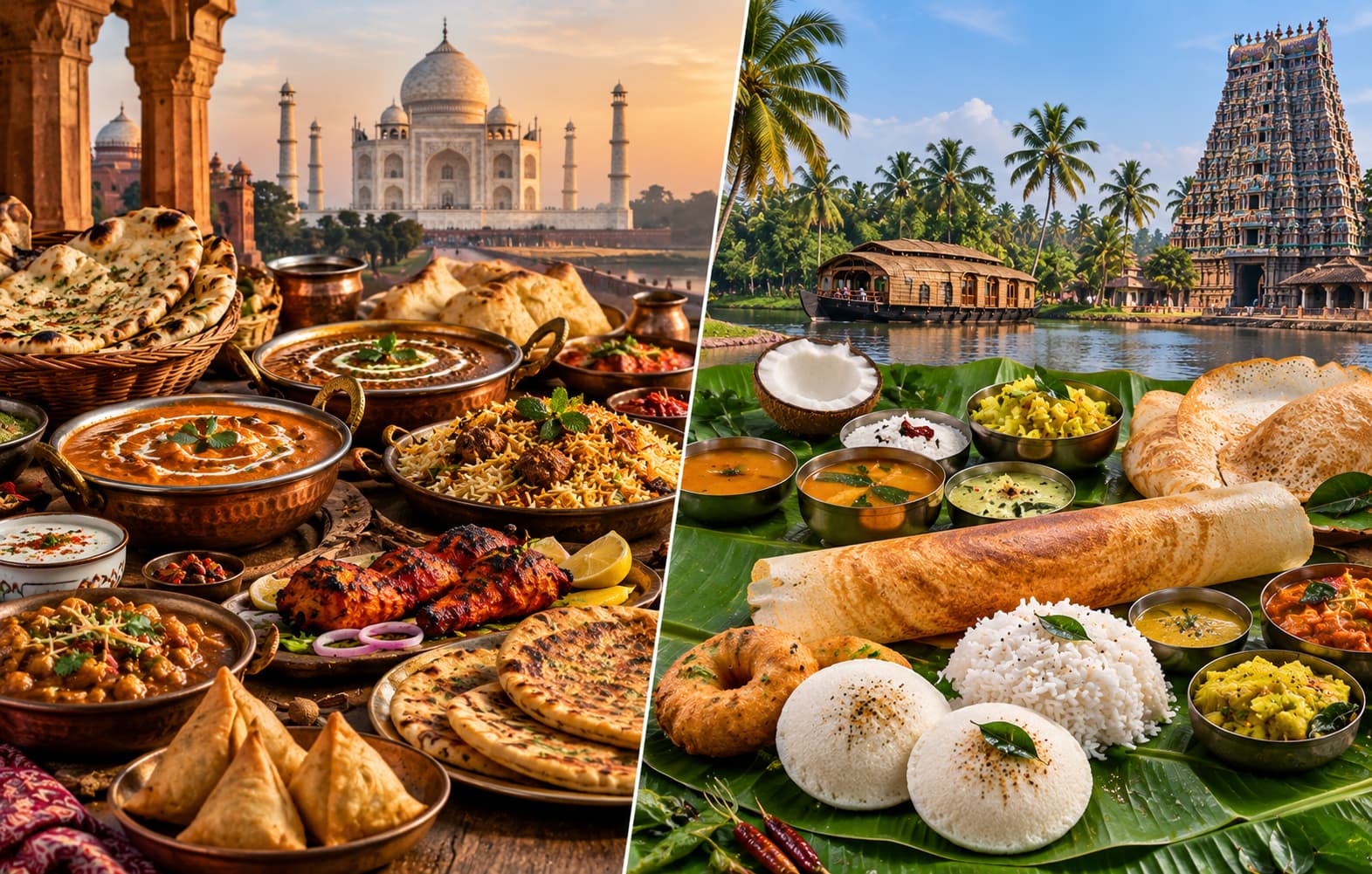
Food can be a highlight of either itinerary. North Indian menus often feature breads such as naan and roti, rich gravies, lentils, grilled dishes, and regional specialties. You’ll also find plenty of vegetarian food, along with a wide range of street snacks and sweets.
South Indian cuisine often includes rice-based meals, dosas, idlis, sambars, and coconut-rich curries. The flavors differ from state to state, so a meal in Kerala may taste quite different from one in Tamil Nadu or Karnataka. Many restaurants also serve vegetarian dishes, and you can usually find options suited to different preferences.
Rather than deciding that one region has “better” food, think about what you’d like to try. If you enjoy breads and hearty curries, North India might be a great starting point. If dosas, rice dishes, and coastal flavors appeal to you, South India could be the better match.
When trying street food, choose busy vendors with high turnover and freshly prepared dishes. Also, let your appetite and comfort level guide you.
Weather and the Best Time to Visit
Weather can influence your choice just as much as sightseeing. North India experiences significant seasonal changes. Winters can be cool, especially in the north and at higher elevations, while summers can become very hot. The monsoon season brings rain to many destinations, though timing and intensity vary.
South India is generally warmer and more tropical. Coastal areas can feel humid, and monsoon patterns vary across the region. Hill stations offer cooler temperatures, making them a welcome break from the heat.
Since conditions differ by state and month, check the forecast and local seasonal advice for the specific places on your route before booking. If you’re visiting during a major festival or peak travel period, reserve transport and accommodation early.
Final Verdict: North India or South India for Your First Trip?
When choosing North India vs South India, start with the experiences you want most. North India is an excellent introduction if you’re drawn to iconic monuments, historic cities, spiritual sites, and mountain scenery. South India may be the stronger choice if you’re excited by temple architecture, coastlines, wildlife, and tropical landscapes.
Neither region offers a complete picture of India on its own—and that’s part of the appeal. Choose a few destinations, allow time to explore, and stay open to the unexpected. Your first trip doesn’t need to cover everything; it just needs to give you a reason to come back.
Plan Your First India Trip
Ready to choose your route? Explore our destination guides, compare travel options, and start building an itinerary around the places you’re most excited to see. Contact our travel team today for help planning a North India or South India trip that fits your schedule and interests.